
Resources
Browse our growing library of free tools, templates and presentations shared by Peers
Jump to: Supplier engagement | Engaging procurement | Data and tools | Strategy | Collaboration | Benchmarking | PCFs and LCAs
If you can’t find what you need, contact rhona@scope3peergroup.com and we’ll do our best to get it to you.
Latest
All the insight slides from the Chicago Strategy Days 2026
So many great ideas, templates and strategies were shared in Chicago. You will find the core insight slides here. Plenty more below from the Peers to learn from, share and copy with pride.
SBTi present the new NZS v2 to the Peers
What the SBTi had to share with the Scope 3 Peer Group in Chicago (June 2026) just a week after the new Net Zero Standard v2 was released.

Copy the Chicago Peers’ Progress
Here are the key slides & templates shared by the Peers and Partners in Chicago June 2026. Use them!
Benchmarking

The Scope 3 Challenge Summary
What the Scope 3 Peer Group members need to tackle and solve in the next 12 months.
-
The Scope 3 Peer Group compile their challenges & advice every 6 months at out in-person meetings. You can view this here.
You can use this to share with your organisation as a strong, fresh guide to what you need to be asking & tackling.
All the slides from the London Strategy Days 2026
Make use of the material that came out of our latest in-person event in London. Many of our speakers shared frameworks, approaches and lessons learned that will save you months of work.

The Scope 3 Maturity Benchmark Report
How you compare in your progress and resourcing of the scope 3 challenge
-
The Scope 3 Maturity Benchmark Report 2024 offers a free and comprehensive guide of insights, best practices, and actionable steps to help organizations manage and reduce their Scope 3 emissions effectively.
In-depth Analysis: Discover detailed findings from over 170 organizations across various sectors.
Actionable Strategies: Access practical steps and frameworks to transition from planning to action.
Collaborative Insights: Learn from leading companies and harness the power of collaboration to drive progress towards Net Zero.
ditchcarbon’s Progress Report
-
This Scope 3 Peer Group progress report highlights leading organisations demonstrating that Scope 3 reduction is both possible and practical.
It emphasises multi-pronged, momentum-building approaches and encourages members to leverage peer case studies to validate business value, apply competitive pressure, and drive internal action toward measurable emissions reductions.

Accenture: Destination Net Zero 2025
-
Accenture’s Destination Net Zero 2025 report finds net-zero targets now mainstream (73% of G2000 companies), yet few are on track—especially when Scope 3 is included.
While CEO support and lever adoption are rising, emissions often still grow. The report outlines five actions to close the ambition–delivery gap, scale AI, and accelerate value-chain decarbonisation.
Industry Collaboration

Supplier Heat Decarbonization
-
ERM outlines a Scope 3 Supplier Heat Decarbonisation Pilot to help brands and suppliers identify cost-effective low-carbon heat solutions.
Through webinars and a self-service tool (via Secaro), suppliers input site data to receive tailored recommendations, matchmaking opportunities and location-based insights, focusing on chemicals and select sectors across NA, Europe and Asia.
Clean Heat Community
-
Through expert collaboration on efficiency, biomethane, electrification, and financing, it fosters deeper engagement, stronger business cases, and cross-industry action to drive value chain emissions reductions.
Supply Chain Emissions in Financial Services
The latest insights from the Finance Initiative for Sustainable Procurement is available now.
-
Supply Chain Emissions in Financial Services is an industry-led, practical guide for organisations managing procurement-related Scope 3 emissions.
Developed by the Finance Initiative for Sustainable Procurement (FISP), in collaboration with Accenture and 8 leading financial institutions, the paper focuses on areas of procurement-managed spend where guidance is often unclear or inconsistently applied.
The paper supports sustainability, procurement and reporting teams to classify procurement spend, make consistent decisions on which categories to include in their footprint, and apply appropriate calculation approaches. While grounded in the financial services context, the guidance is relevant to any organisation seeking to improve the credibility, consistency and transparency of its supply chain emissions reporting.

The Value Chain Decarbonization Blueprint
-
The Blueprint outlines a strategic framework for collaboration across tiers of industry value chains.
We have started with the Life Sciences industry to collectively decarbonize and emphasizing the necessity of joint investment and collaborative effort.
The Scope 3 Peer Group wants to support the co-ordination of collaborative effort in and across value chains.
This Blueprint - developed in partnership with Accenture - will help industries focus attention on the key challenges, priorities, initiatives, tools and projects.
We have begun with the Life Sciences industry.
Strategy

Haleon’s Green Heat Pilot
-
Haleon’s Green Heat approach outlines progress reducing Scope 1 and 2 emissions (55% since 2020, 100% renewable electricity) and targeting Scope 3 heat emissions across its supply chain.
The strategy combines heat pumps, biomethane, biomass, green hydrogen and supplier engagement, supported by Johnson Controls, to scale low-carbon heat solutions and deliver measurable decarbonisation by 2030.
Haleon’s Scope 3 Plan
-
Haleon’s Scope 3 Plan outlines a granular, data-driven model to optimise decarbonisation across power, heat and feedstocks in 57 countries.
By improving emissions-factor accuracy, hotspot visibility and supplier engagement, it identifies the cheapest abatement levers, unlocks 35–45% power reductions, and delivers targeted, cost-efficient action—achieving transition goals at under 20% of original cost.
Pfizer Innovation Approach to Move from Targets to Actions
-
Pfizer outlines an innovation-led supplier engagement strategy to accelerate Scope 3 decarbonisation, integrating Supplier Enabled Innovation and its 4I methodology (Identify, Insight, Ideas, Impact).
Through a Net Zero Request for Solution focused on low-carbon packaging, suppliers co-develop, evaluate and implement scalable emissions-reduction solutions aligned with cost, quality, regulatory and safety requirements.
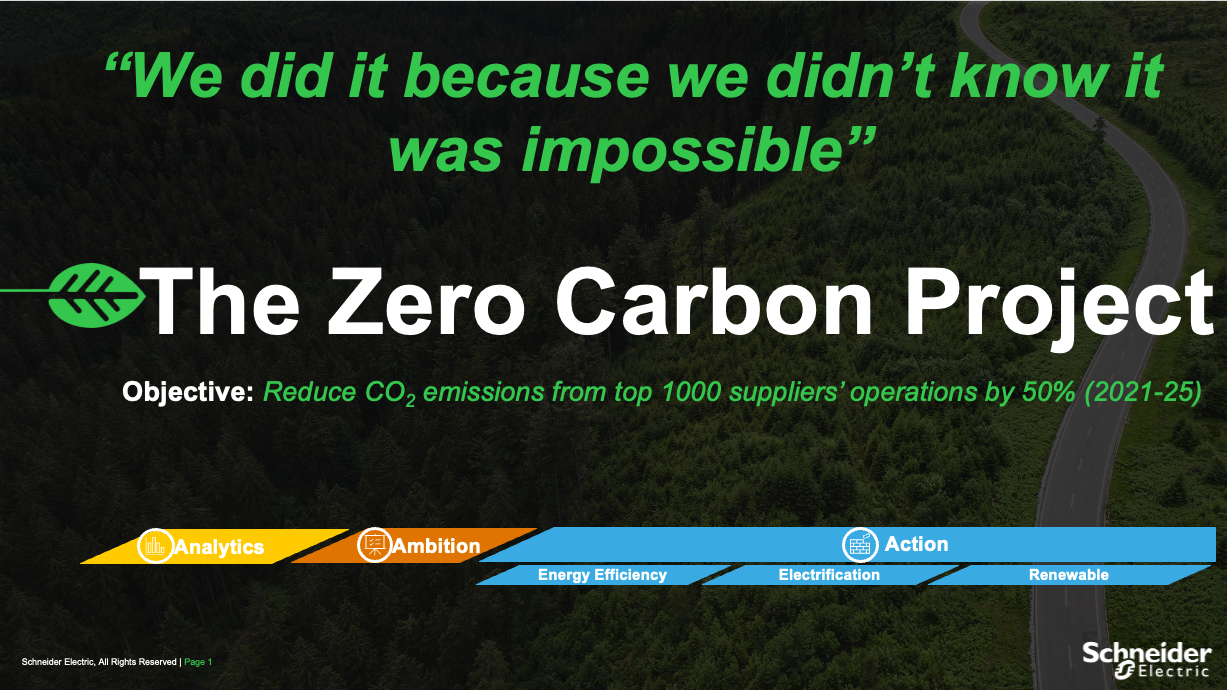
The Zero Carbon Project
Schneider Electric
-
Schneider Electric’s Zero Carbon Project aimed to cut CO₂ emissions from its top 1,000 suppliers by 50% (2021–25), achieving a 53% average carbon-intensity reduction through training, governance, digital tools and financial support.
The program now expands to 1,500 suppliers, embedding Scope 3, product carbon footprints and responsible materials into procurement decisions under its 2026–2030 Sustainable Procurement framework.

Case study and template: Schneider Electric’s Zero Carbon Project
-
A case study and template for aligning business values & strategy with the key principles to best achieve Scope 3 targets, and organising cross-functional teams. Produced by Christophe Quiquempoix, Vice President Global Procurement - Sustainable Procurement, Schneider Electric.

Case study: NHS England’s Net Zero Supply Chain approach
-
An outline of how NHS England is driving decarbonisation in the the supply chain - including a commitment to have PCFs from ALL suppliers by 2028. Produced by Alexandra Hammond, Associate Director, Net Zero & Sustainable Procurement, NHS England.
Supplier engagement
AstraZeneca: Developing sustainable business partnerships
-
AstraZeneca outlines its sustainable procurement strategy to drive Scope 3 reductions through supplier segmentation, science-based targets, and embedded procurement requirements.
Leveraging collaborative initiatives (PSCI, Energize, Activate), robust data (PCF, CDP, EcoVadis), and SRM tracking, AZ integrates decarbonisation into sourcing, contracts and scorecards, targeting 50% supplier emission reductions by 2030.
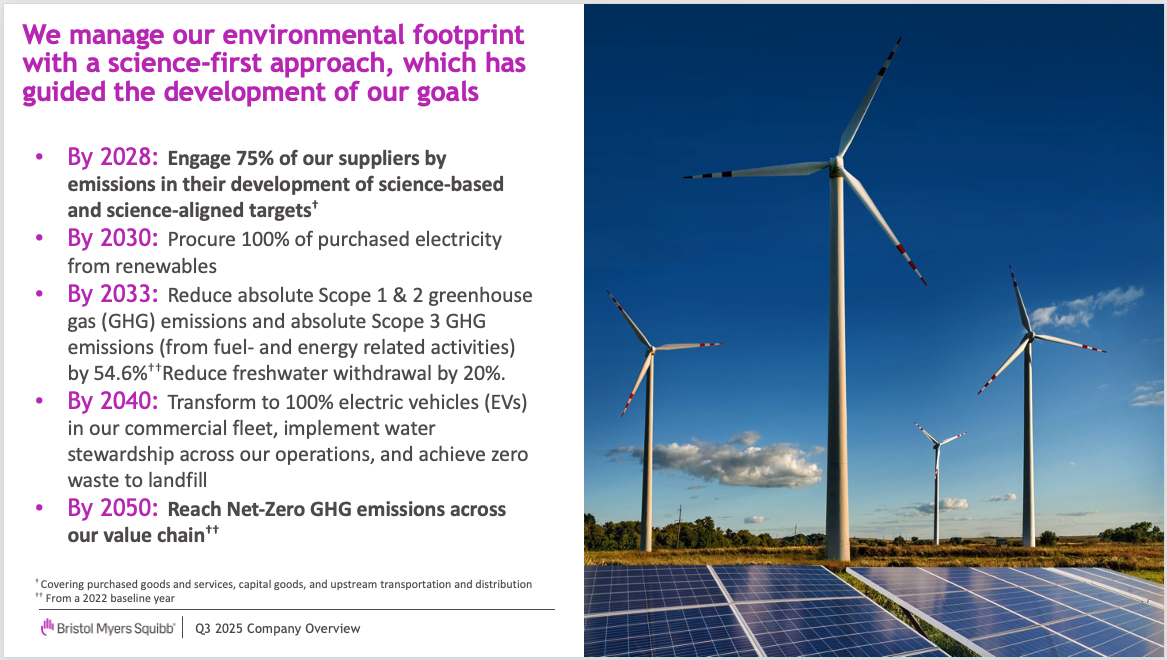
The Bristol Myers Squibb Supplier Decarbonization Accelerator
-
Bristol Myers Squibb outlines its science-based climate strategy, targeting supplier engagement, renewable electricity, Scope 3 reductions and net zero by 2050.
Central is the Supplier Decarbonization Accelerator, offering tools, training and resources to help suppliers measure emissions, set targets and implement decarbonization, driving progress across its complex, highly regulated global value chain.
Bayer’s Supplier Decarbonization Program
-
Bayer outlines its Supplier Decarbonization program as central to its 2030 sustainability strategy, targeting a 25% Scope 3 reduction by 2029 and net zero by 2050.
The approach combines supplier collaboration, procurement empowerment, PCF exchange (SiGREEN), renewable energy activation and a maturity framework to embed carbon into sourcing, performance management and value chain engagement.
The 1.5°C Business Playbook
-
The 1.5°C Business Playbook is a guide for companies that are at the beginning of – or mid-way towards – taking climate action. It covers the aspects a company needs to think about to align with a 1.5-degree ambition. It is short but comprehensive and easy read and companies can pick up what is most relevant for them and build upwards.

Guidance from the Exponential Roadmap Initiative
-
The Exponential Roadmap Initiative webpage has lots of guidance. Companies can dive into Circularity (medium), Renewable Energy in the supply chain (advanced), Cash in bank (advanced), Climate Solutions (advanced, but also for beginners wanting to be net zero ready from the start) and those more in depth topics that may be for the more advanced.

SME Climate Hub
-
The SME Climate Hub is the most all-round one stop shop out there, where Small and Medium sized Enterprises can make a commitment, find guides for how to reduce, education on climate knowledge and also create their own public climate reports, all for free.

Case study: Engaging suppliers for Scope 3 reductions at Hempel
-
How to build a Supplier Engagement strategy
Dagny Nome, Procurement Sustainability Manager, Hempel A/S shares how she developed her strategy and tactics for identifying, segmenting, engaging, measuring, developing emission factors, and collaborating with suppliers, including Tier 2 and below.

Case study: Supplier Sustainability Engagement on Scope 3 at CCEP
-
Philip Kavvadias, Senior Manager - Supplier Sustainability, Coca-Cola EuroPacific Partners (CCEP) on how to build a supplier engagement strategy.

Case study: Supplier engagement at FDLSmidth
-
How to build a supplier engagement strategy
Rikke Gade Christensen, Head of Sustainable Supply Chain, FLSmidth (a global mining & cement equipment supplier) shares how she developed her strategy and tactics for identifying, segmenting, engaging, measuring, developing emission factors, and collaborating with suppliers.
This includes a focus on handling smaller suppliers, especially high emitters.
Data and tools
Visit www.scope3tools.com for more insight
Scope 3 Tools Review
-
The Scope 3 Peer Group asks its members once per year about the noisy landscape of scope 3 tools in the market. Collectively we’ve seen & heard thousands of demos, pitches and promises.
We compile all this opinion and insight into this document and make it available to anyone, anywhere for free. A huge thank you to Miguel Cossio for his support! The forthcoming Scope 3 Podcast will take a different look at the philosophies and visions of many of the solutions’ founders.
We hope it helps you make faster & more confident decisions. But make sure you talk directly to your most immediate peers as well, first.

Navigating the Technology Landscape for Scope 3 Solutions
-
Miguel Cossio, Procurement Research Director - Supply Chain, Gartner shares his advice, tips and views on selecting Scope 3 tools and the future of the market, including insight from the Scope 3 Peer Group Tools Landscape Survey.

Shifting from spend-based methodology at UCB Pharma
-
Daniela Urquiza Travi, Sustainability Manager, UCB Biopharma shares her strategy for collecting the right mix of data, analysing, and reporting – including how she selected the right tools for the job.

Supplier data and methodology for NSG
-
Jarosław Plewniok, Procurement Manager – Supplier Capability & Development, NSG shares how his business has implemented a sustainable supply chain strategy to maximise positive environmental and societal impact, increase innovation, reduce cost and risk, and enhance NSG’s brand.

Pfizer’s supplier engagement and data methodology journey
-
Maria Terracina, Sustainable Sourcing Lead, Pfizer shares her strategy for collecting the right mix of data, analysing and reporting. She explains how to support supplier-specific emission factor development, at scale and speed.

Scope 3 at Dow
-
Suzanne Greene, Procurement Environmental Sustainability Director, Dow shares her strategy for collecting the right mix of data, analysing and reporting.

What is the Carbon Accounting Alliance?
-
An introduced to the Carbon Accounting Alliance, on a mission to bring carbon accountants together for collective impact.

What is the chemical industry’s PCF Verification Framework?
-
An introduction to Together for Sustainability’s PCF Verification Framework, created by the chemicals industry to better enable the quality of PCF data.
Engaging procurement teams
Surveys, Benchmarks, Conclaves: Just another day in procurement
-
Proxima’s Scope 3 Peer Group presentation introduces a 27-dimension Scope 3 Maturity Benchmark assessing procurement and sustainability integration.
Findings show median organisations risk missing targets due to weak enablement, limited technology adoption and insufficient carbon integration in decision-making, while leaders embed Scope 3 into roles, processes and procurement strategy to accelerate progress.

Engaging procurement at CBRE
-
Mat Langley, Global Procurement Head ESG, CBRE shares his strategy for capability-building his procurement teams – including setting KPIs, training, tools, data and content.

Engaging and capability building in procurement on Scope 3 at Chr. Hansen
-
Sruthi Surendran, Sustainable Sourcing Manager, Chr. Hansen explains how to support procurement with the right questions and actions for suppliers.

Smart Freight Centre’s Sustainable Logistics Procurement Playbook
-
The Sustainable Logistics Procurement Playbook from the Smart Freight Centre and the Sustainable Freight Buyers Alliance.
It explains how to facilitate the transition to logistics decarbonisation by integrating sustainability in logistics procurement.

Bayer’s approach to Carbon Pricing
-
The team at Bayer explain how they are embedding the cost of carbon into procurement decisions.
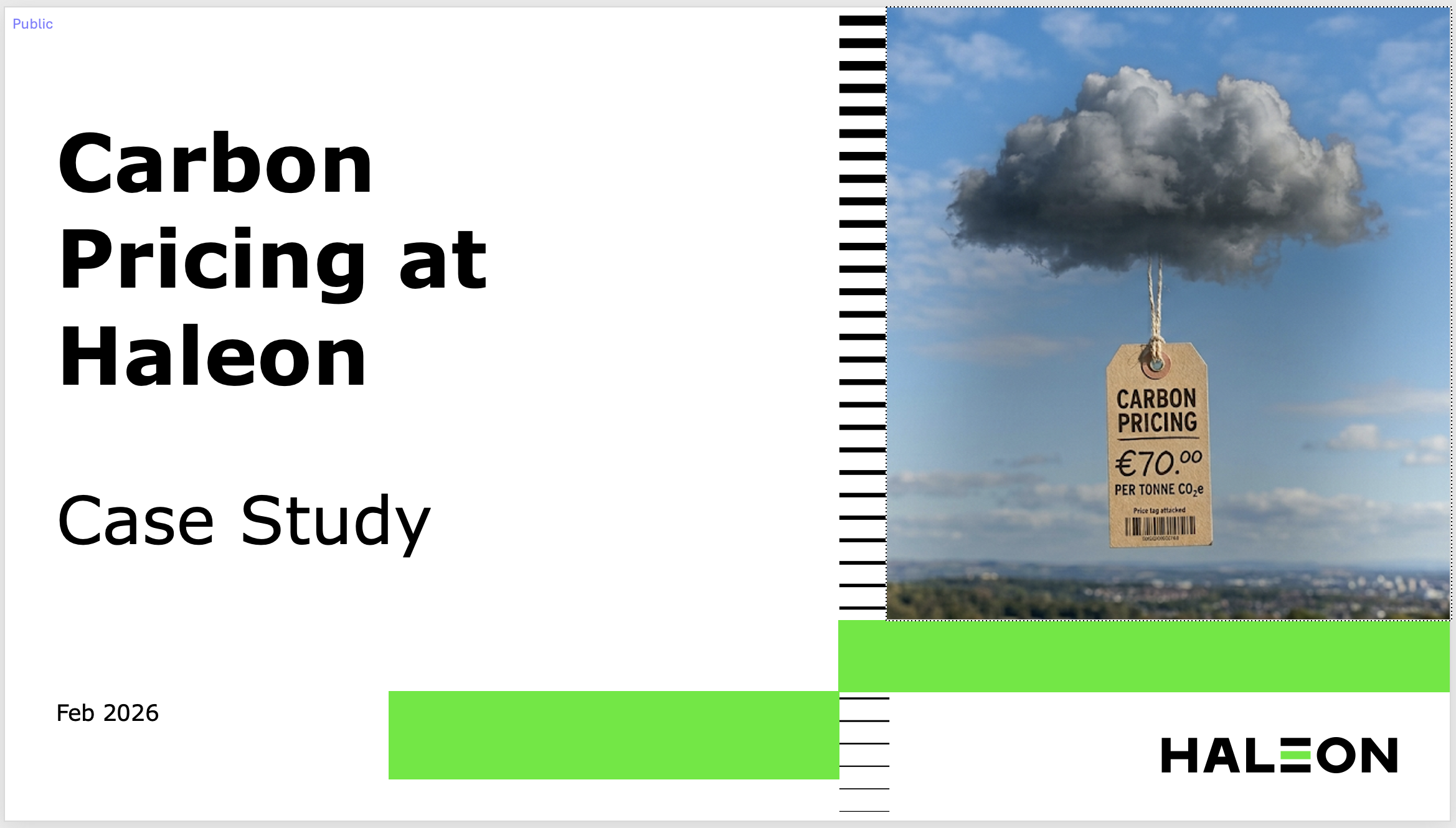
Haleon’s approach to Carbon Pricing
-
The team at Haleon explain how they are embedding the cost of carbon into procurement decisions.
Product carbon footprinting (PCFs) + lifecycle assessments (LCAs)

PCF Data Exchange Workshop
Together for Sustainability
-
This document outlines Together for Sustainability (TfS) and PACT’s collaboration to standardize, calculate, verify, and exchange Product Carbon Footprints (PCFs) across chemical supply chains
It presents the Scope 3 GHG program, SiGREEN exchange solution, interoperability standards, supplier enablement, and Chem-X expansion beyond carbon, urging companies to adopt harmonized methodologies and drive emissions reductions.

VITA Group’s LCA-driven insight
-
The Vita Group outlines its Scope 3 strategy centred on circularity, LCA-driven insight and supplier collaboration to drive net-zero emissions.
By collecting and interrogating supplier data, identifying hotspot materials, improving production efficiency, switching materials and fostering innovation partnerships, Vita aims to turn carbon insights into customer value while accelerating sustainable growth and industrial transformation.

All the evolving insight around the digital tools for managing scope 3 is found at www.scope3tools.com - a platform created in partnership with Nick Donoghue’s blizzardwood.
We also partner with the WBCSD’s Climate Drive to share our Case Studies.